News
From industrial digitalisation ambitions to policy action in Indonesia
Published on September 23rd 2026
Around the world, digital technologies are reshaping manufacturing, creating opportunities to improve productivity, develop new industrial capabilities, and support greener production. However, successful industrial digitalisation depends on much more than access to individual technologies.
In August 2026, Cambridge Industrial Innovation Policy (CIIP) delivered a two-day capacity-building programme in Bandung for Indonesia’s Ministry of Industry. ‘Introduction to Industrial and Digitalisation Policy’ aimed to strengthen participants’ understanding of industrial and digitalisation policy, while providing practical frameworks to support the design of effective policy interventions. Participants explored international experience, applied systems thinking to Indonesia’s industrial context, and used tools to translate policy objectives into activities, outcomes, and longer-term impact.
This capacity-building programme was developed for Indonesia’s Ministry of Industry as part of the project “From Strategy to Action: In-Country Assistance for Green Industrial Strategies”, funded by the Open Society Foundations and in collaboration with UNIDO’s Sub-Regional Office in Jakarta.
The Challenge
As Indonesia seeks to accelerate industrial digitalisation, the challenge for policymakers is to understand how technology adoption interacts with the wider industrial and innovation system, including supply chains, institutions, and the different actors involved in developing and adopting new technologies. It also requires an understanding of which policy interventions can support industrial digitalisation effectively.
In Indonesia, this means strengthening the Ministry of Industry’s ability to understand how institutions, actors and policy instruments can work together to address interconnected industrial and digitalisation priorities and translate broad ambitions into structured policy design.
The Approach
The course was designed to combine research and policy expertise from the University of Cambridge with international experience of industrial innovation and digitalisation policy. The programme brought together CIIP’s expertise and experience working with governments and international organisations, alongside international perspectives, including contributions from UNIDO. Through conceptual frameworks, international policy examples, practical exercises and facilitated discussion, the programme aimed not only to introduce participants to industrial innovation policy, but to equip them with approaches and tools they could apply to policy challenges within Indonesia.
“Throughout the programme, international examples were combined with discussion of Indonesia’s own industrial context, helping participants consider not only what has worked elsewhere, but how different approaches might need to be adapted to local institutions and priorities.”
Dr Carlos López-Gómez, Cambridge Industrial Innovation Policy
The first day established the foundations for a systems approach to industrial digitalisation. CIIP experts introduced global industrial and policy trends, key concepts in digital manufacturing, green and low-cost digital technologies, and the rationale for industrial innovation policy. Sessions then drew on research into modern industrial and innovation systems to explore supply chains, industrial commons, innovation system functions, and the roles of different actors.
A group exercise asked participants to apply these concepts directly to Indonesia’s innovation system, combining CIIP’s analytical frameworks with participants’ own knowledge and experience of the country’s industrial context. This enabled participants to examine the institutions, relationships, and capabilities shaping industrial innovation in Indonesia.
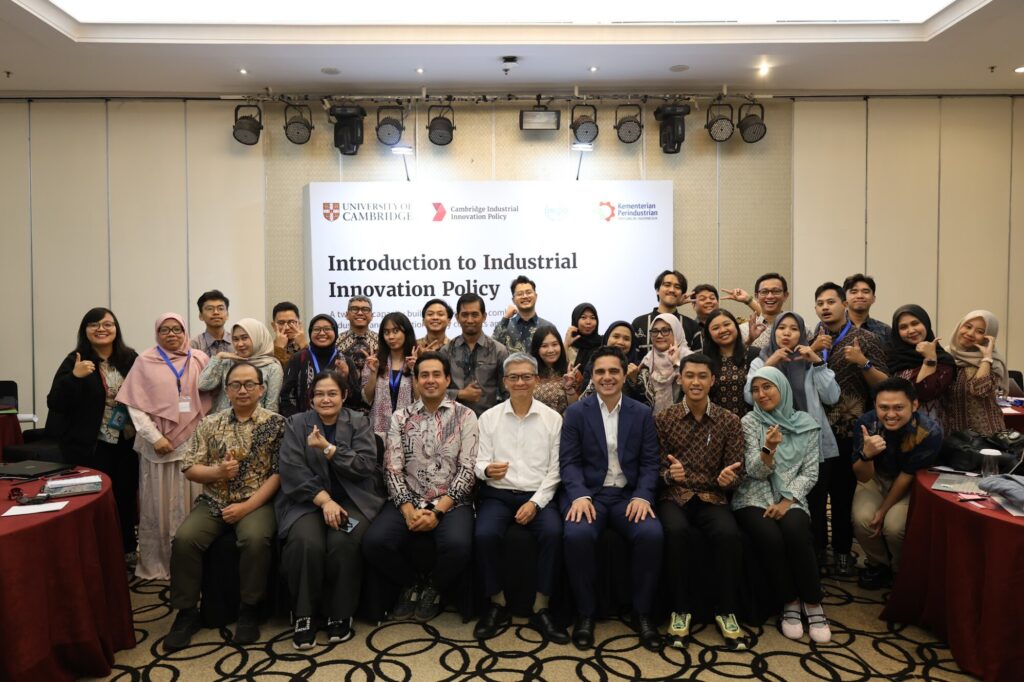
The second day moved from understanding the system to designing policy responses, combining insights on the impact of emerging technologies in Indonesia with international policy examples. Participants then applied logic models and Theory of Change to connect policy challenges with activities, outcomes, and intended impacts, and consider how these approaches could support the development of digital centres.
The Impact
Feedback indicates that the programme strengthened participants’ understanding of industrial innovation policy and provided practical frameworks they could use in their work. The training received an overall rating of 4.8/5, with 83% of respondents awarding it the highest rating. Participants also rated the usefulness of the course content for their work at 4.6/5 and the level of engagement at 4.6/5.
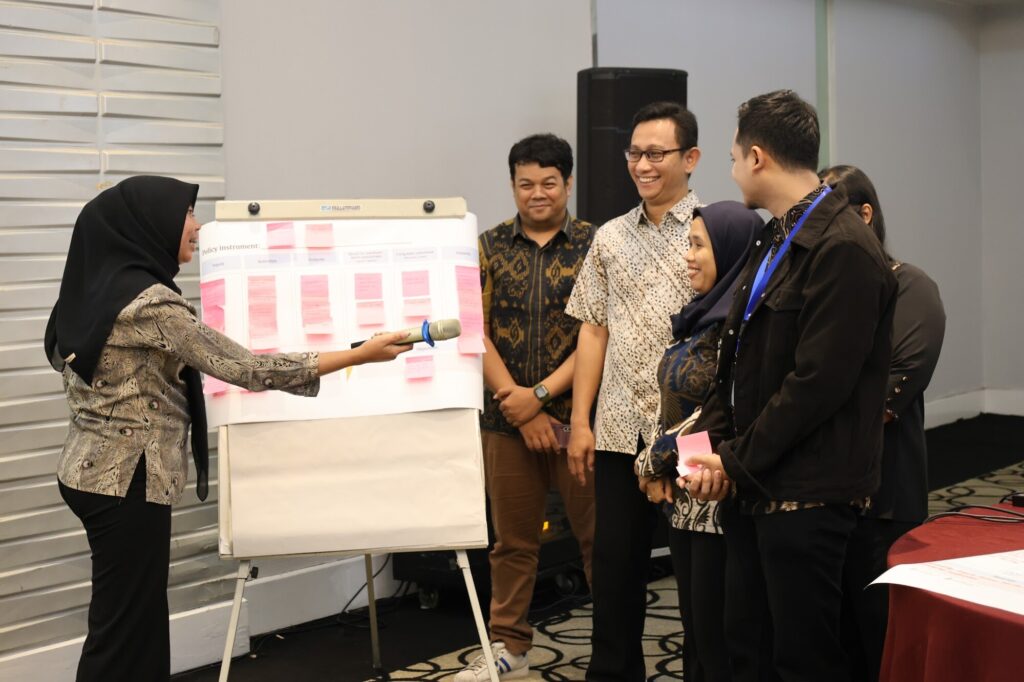
Several themes emerged from participants’ reflections:
- More structured approaches to policy design: Participants highlighted the value of frameworks that helped them connect industrial challenges with appropriate policy interventions and longer-term outcomes.
- A more systemic view of industrial transformation: Participants reflected on the importance of looking beyond individual technologies and considering the wider ecosystem needed to support digital transformation.
- Greater confidence to apply policy concepts: Participants described the programme as relevant to their roles as policymakers and policy analysts,
identifying opportunities to use the frameworks to formulate policy recommendations, develop regulation, and support better policymaking. - Learning through collaboration: Group exercises created opportunities for participants to pool their knowledge of Indonesia’s industrial and innovation system, discuss different perspectives, and work collectively on policy challenges.
Taken together, the feedback suggests that the programme helped participants move beyond viewing industrial digitalisation primarily as a technology adoption challenge. Instead, it encouraged a more systemic approach, linking technology with institutions, capabilities, policy instruments, and clearly defined outcomes – providing practical foundations for the design of industrial digitalisation policy in Indonesia.
“The most valuable takeaway was learning how to design effective industrial policies using a structured approach, from identifying industry needs to developing policy instruments and outcomes.”
Training participant
“I learned how to look at industrial policy from a more systemic perspective, especially how a policy instrument can be designed to address specific challenges and createlong-term outcomes.”
Training participant
Participants’ suggestions for future programmes included holding the initiative annually to strengthen government employees’ strategic thinking and ability to develop and apply strategic frameworks.
Cambridge Industrial Innovation Policy helps governments and public organisations build the skills needed to design effective, future-ready industrial and innovation strategies. Our training courses combine cutting-edge research from the University of Cambridge with practical tools, international case studies, and real-world policy experience. Designed for policymakers, civil servants, and industry leaders, our programmes support evidence-based decision-making, helping investments in science, technology, and innovation deliver tangible economic, social, and environmental impact.
Find out more about our training courses
Get in touch to find out more about connecting with our community